The Courage to Let Go of Control
Jun 10, 2026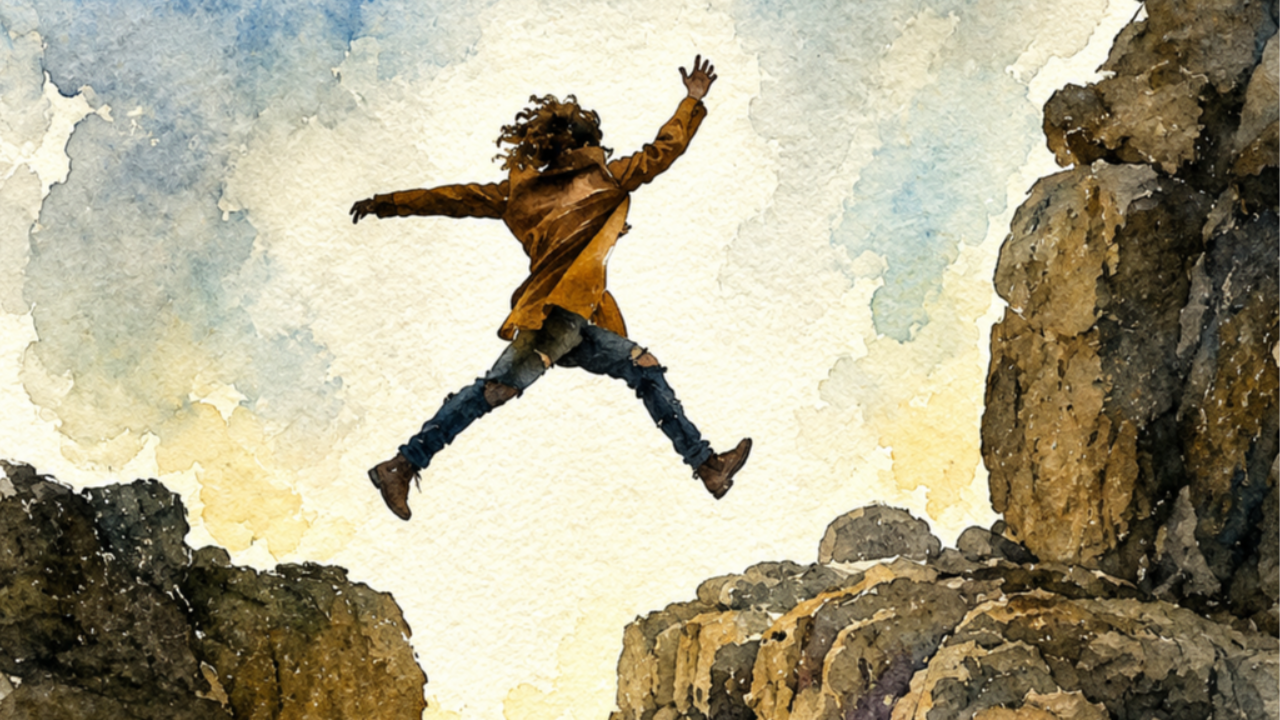
Why patience begins the moment we stop trying to force life to unfold on our timeline
Much of our suffering comes from a simple but exhausting habit:
Trying to control what was never fully ours to control.
We try to control outcomes.
Control timing.
Control how others perceive us.
Control uncertainty.
Control the future before it arrives.
And beneath all of it is a deeper desire:
We want to feel safe.
Control often masquerades as strength, but many times it is fear wearing armor.
If I can predict everything, maybe I won’t get hurt.
If I can force clarity, maybe I won’t have to feel uncertainty.
If I can make things happen faster, maybe I can avoid discomfort.
But life rarely unfolds according to our preferred timeline.
Relationships evolve unpredictably.
Creative visions take longer than expected.
Healing arrives in layers.
Answers emerge slowly.
Loss changes us permanently.
New beginnings often appear only after periods of confusion.
And this is where patience becomes deeply intertwined with surrender.
Not surrender as defeat.
Surrender as trust.
Trust that not everything meaningful can be forced.
One of the most difficult truths to accept is that growth is often invisible while it is happening.
A seed beneath the soil appears inactive long before it breaks through the earth. Yet beneath the surface, essential work is already unfolding.
Roots are forming.
Strength is developing.
Life is preparing itself for emergence.
Human transformation often works the same way.
There are seasons where it feels as though nothing is happening.
You meditate but still feel restless.
You work toward a vision but see little progress.
You try to heal yet old emotions continue resurfacing.
You seek clarity but remain in uncertainty.
And because we cannot yet see visible results, impatience begins whispering:
Maybe this isn’t working.
Maybe I should give up.
Maybe I’m behind.
Maybe something is wrong.
But what if the unseen seasons are not empty at all?
What if they are necessary?
In our culture, we tend to celebrate visible breakthroughs while overlooking the quiet endurance that made them possible.
We admire the performance but forget the years of practice.
We celebrate the harvest but ignore the seasons of cultivation.
We applaud arrival while dismissing the patience required to get there.
Yet nearly everything meaningful in life asks something difficult of us:
To continue nurturing what has not fully bloomed yet.
This is especially true in moments of uncertainty.
The mind desperately wants guarantees.
We want certainty before taking risks.
We want proof before trusting.
We want clarity before moving forward.
But patience asks us to develop a different relationship with the unknown.
Not knowing becomes part of the path itself.
This can feel profoundly uncomfortable because uncertainty exposes our lack of control. And when we cannot control external circumstances, we often tighten internally.
We overthink.
We micromanage.
We obsess over outcomes.
We attempt to force resolution.
But force and wisdom rarely move together.
Some things can only unfold when we stop gripping them so tightly.
I’ve seen this often in music.
When a pianist becomes overly attached to perfection, the music loses its aliveness. The performance becomes mechanical. Constricted. Controlled.
But improvisation requires something else entirely.
Listening.
Trust.
Responsiveness.
Presence.
You cannot force emergence.
You create the conditions for it.
Then you remain open enough for something authentic to arrive.
Life asks the same of us.
Patience is not passive waiting with crossed arms.
It is active participation without attachment to immediate results.
There is a profound difference between:
“I need this to happen now in order to feel okay.”
And:
“I will continue showing up faithfully while allowing life to unfold organically.”
The second contains peace.
This is why patience and acceptance are inseparable.
Acceptance does not mean we stop caring.
It means we stop arguing with reality.
We stop demanding that life be different before we allow ourselves to be present within it.
Ironically, this often creates more clarity, not less.
When we stop panicking, we can think clearly.
When we stop forcing, we can listen deeply.
When we loosen our grip, we regain perspective.
Patience creates space for wisdom to emerge.
One of the greatest misunderstandings about surrender is the belief that letting go means becoming passive or indifferent.
But true surrender can actually make us more engaged with life.
Because instead of wasting energy resisting reality, we begin participating in it fully.
We become attentive rather than reactive.
Responsive rather than controlling.
Grounded rather than frantic.
And slowly, something softens.
The nervous system relaxes.
Time feels less adversarial.
The future stops feeling like something we must conquer.
We begin trusting that not every unanswered question requires immediate resolution.
Sometimes clarity arrives gradually.
Sometimes healing unfolds quietly.
Sometimes life is preparing us for something we cannot yet understand.
And perhaps patience is simply the willingness to remain open during that unfolding.
Not because we know exactly where the path leads.
But because we trust there is wisdom in continuing to walk it.
Reflection
Where in your life are you gripping most tightly right now?
And what might shift if you allowed yourself to loosen your hold, even slightly?
Meditation Practice
Find a comfortable seated position.
Bring to mind one situation in your life where you are seeking control, certainty, or immediate resolution.
Notice what happens in the body as you think about it.
Is there tightness?
Pressure?
Restlessness?
Without trying to fix anything, take a slow breath.
As you exhale, silently repeat:
“I do not need to force this moment.”
Sit for a few minutes allowing the breath to soften the inner grip.
Observe what changes when control gives way to presence.