The Lost Art of Patience in an Age of Immediacy
May 27, 2026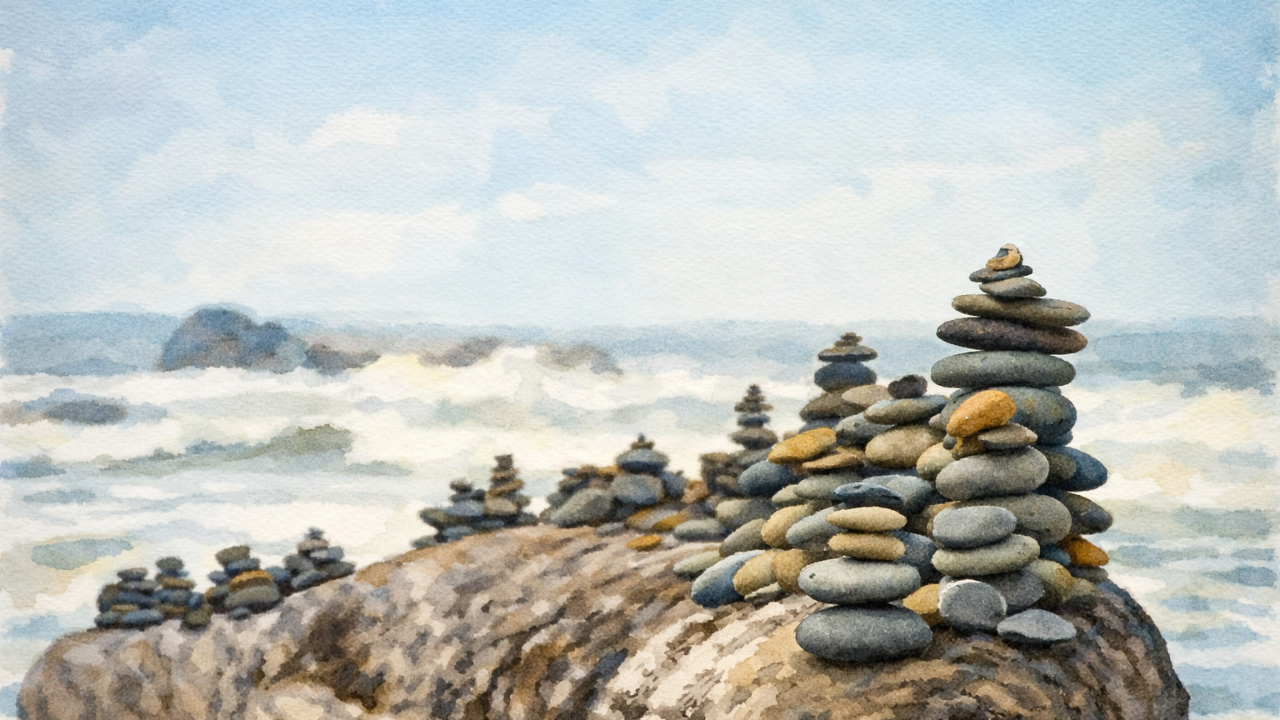
How slowing down may be the most radical act of our time
We live in a world that has trained us to expect everything immediately.
A message arrives instantly.
A movie begins with a click.
Food appears at our door within minutes.
Answers live in our pockets.
And slowly, almost imperceptibly, we begin to lose our relationship with waiting.
Not just waiting in line.
Waiting for clarity.
Waiting for healing.
Waiting for understanding.
Waiting for transformation.
We’ve become conditioned to believe that if something meaningful doesn’t happen quickly, something must be wrong.
But nature has never worked this way.
A tree does not apologize for taking years to grow.
The ocean does not rush its tides.
Music unfolds note by note, silence by silence.
Even the breath arrives only one inhale at a time.
And yet somewhere along the way, many of us began treating our lives like problems to solve rather than experiences to inhabit.
Patience has become misunderstood.
We often think of patience as passive. As waiting. As tolerating delay until we finally arrive somewhere better.
But real patience is not passive at all.
Patience is an active relationship with the present moment.
It is the ability to remain open, aware, and grounded while life unfolds at its own pace.
And perhaps this is why patience feels so difficult today.
Because impatience is no longer just a personal habit. It has become cultural conditioning.
We are surrounded by systems designed to shorten attention spans, accelerate gratification, and keep us in a constant state of anticipation. The nervous system rarely gets a chance to settle. We move from notification to notification, task to task, thought to thought, often without ever fully arriving where we already are.
The result is subtle but profound.
We become uncomfortable with uncertainty.
Uncomfortable with silence.
Uncomfortable with stillness.
Uncomfortable with not knowing.
And when discomfort arises, our instinct is often to escape it immediately.
We distract.
We react.
We scroll.
We abandon things too soon.
We search for certainty before wisdom has had time to emerge.
But some of the most important experiences in life cannot be rushed.
Trust takes time.
Love takes time.
Healing takes time.
Creative work takes time.
Transformation takes time.
Even becoming ourselves takes time.
In many ways, patience is the foundation beneath nearly every meaningful human experience.
And yet patience is not something most of us are naturally taught.
We enter this world crying for immediate needs. As children, we learn quickly that urgency often gets attention. Then we inherit a culture that rewards speed above almost everything else.
So if patience feels difficult, that does not mean something is wrong with you.
It means you are human.
The beautiful thing is that patience is not simply a personality trait. It is a practice. A capacity that can be cultivated.
Like meditation.
Like listening.
Like presence itself.
Over the years during MindTravel experiences, I’ve watched thousands of people sit together in silence, under the stars, on beaches, in parks, in concert halls, allowing themselves (sometimes for the first time in a long time) to simply be where they are.
At first, there is often restlessness.
The mind searches for stimulation.
The body wants movement.
Thoughts demand resolution.
But then something begins to soften.
Breathing slows.
Awareness widens.
Time expands.
And beneath all the noise we discover something unexpected:
Life was never actually rushing us.
We were rushing ourselves.
Patience invites us back into relationship with life as it truly unfolds: organically, cyclically, mysteriously.
Not everything blooms in the season we expect.
Not every answer arrives when we demand it.
Not every path reveals itself immediately.
But often what appears to be delay is actually preparation.
Roots growing beneath the surface.
In the weeks ahead, I want to explore patience not as a virtue to admire from afar, but as a living practice we can embody in everyday life.
We’ll explore:
- impatience and emotional reactivity
- control and surrender
- creativity and persistence
- our relationship with time
- nature’s wisdom
- parenting, empathy, and love
- and ultimately, how patience becomes a pathway to presence itself
Because perhaps patience is not about getting better at waiting.
Perhaps it is about learning how to fully live while we wait.
And maybe that changes everything.
Reflection
Where in your life are you trying to rush an unfolding that requires more time?
And what might become possible if, instead of resisting the pace of life, you learned to move with it?
Meditation Practice
Today, choose one moment you would normally rush through:
- waiting at a stoplight
- standing in line
- walking somewhere
- drinking your morning coffee
Instead of reaching for distraction, simply observe.
Notice the breath.
Notice the body.
Notice the sounds around you.
For a few moments, allow yourself to arrive completely where you already are.
Patience begins there.