The Philosophy of Hope: From Despair to Collective Possibility
Apr 22, 2026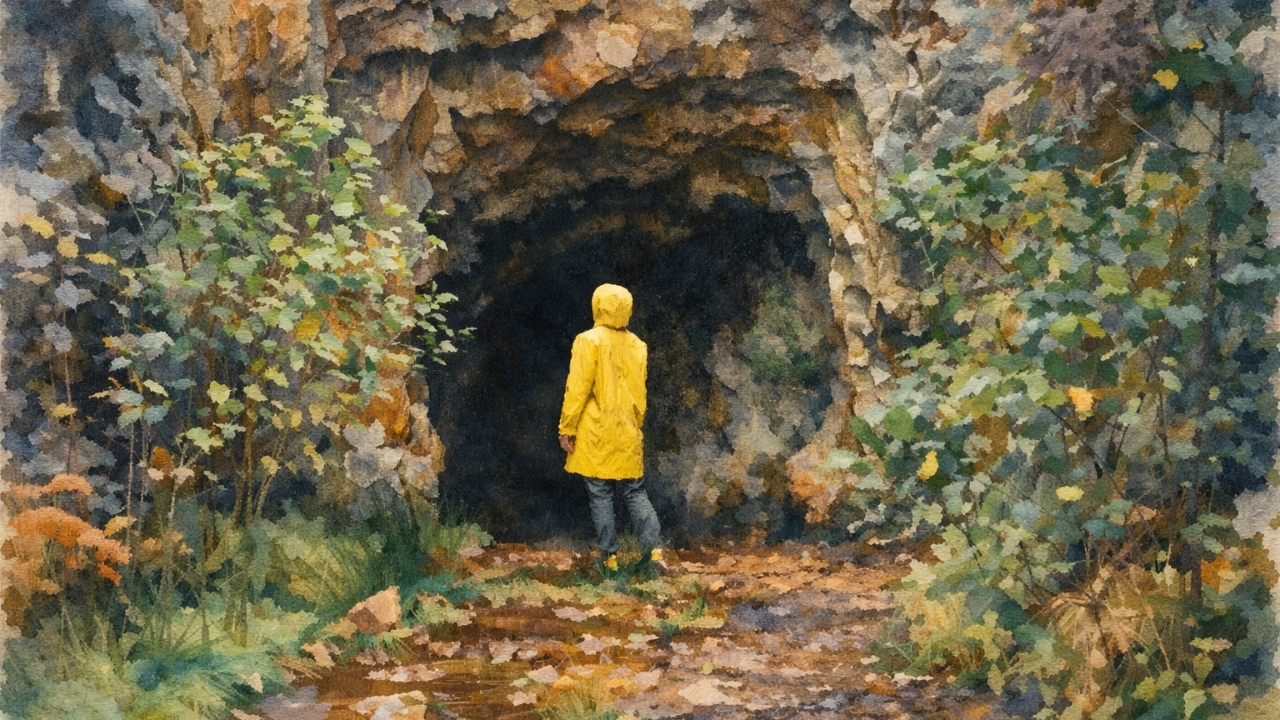
What is it to hope?
Is it a thread of light
peeking through the crack in a cellar door?
Is it a radiant beacon in the distance?
Or is it — as Nietzsche warned — something that “prolongs the torments of man”?
Hope has always unsettled philosophers.
It has inspired revolutions.
It has comforted the grieving.
It has delayed necessary action.
It has fueled extraordinary courage.
It is not a simple virtue.
It is a force.
And like all forces, it can either animate us — or anesthetize us.
This series has explored hope from multiple angles: empowering vs. disempowering, active vs. passive, individual vs. collective, grounded vs. illusory.
Here, we gather the threads.
Hope Lives in Uncertainty
We do not hope for what is inevitable.
We do not hope for what is impossible.
Hope lives in the uncertain middle — the space between desire and control.
That space is uncomfortable.
It exposes us.
To hope is to admit: I care.
To despair is often to admit: I cared deeply.
Hope and despair are not opposites.
Despair is grief for what might have been.
Hope is the willingness to remain open to what might still be.
They live side by side.
The Risk of Hope
Friedrich Nietzsche wrote:
“Hope, in reality, is the worst of all evils because it prolongs the torments of man.”
This is not a rejection of possibility.
It is a warning about passivity.
Hope becomes corrosive when it replaces action.
When it tells us to endure suffering while waiting for rescue.
When it pulls us into imagined futures and disconnects us from present responsibility.
Passive hope says:
Maybe something will change.
Active hope asks:
What is mine to do?
From Passive Hope to Active Hope
Passive hope waits.
Active hope moves.
Passive hope fantasizes about outcome.
Active hope commits to alignment.
Active hope does not deny uncertainty.
It simply refuses to be immobilized by it.
It takes the next step.
And then the next.
And then the next.
The Moral Grounding of Hope
Immanuel Kant offered a powerful principle: act in a way that treats humanity — in yourself and others — always as an end, never merely as a means.
Applied to hope, this shifts everything.
We do not act in order to secure a future reward.
We act because the action itself is aligned.
When hope becomes transactional — “I’ll do this if it leads to that” — it destabilizes.
When hope becomes principled — “I act because it is right” — it steadies.
This is adulthood in hope.
It is maturity.
It is resilience.
Hope Without Illusion
There is a thin line between hope and superstition.
Crossed fingers.
Whispered wishes.
Magical thinking.
Hope untethered from reality becomes illusion.
It can act like a drug — briefly uplifting, ultimately destabilizing.
Hope grounded in clear seeing is different.
It does not deny difficulty.
It does not exaggerate possibility.
It accepts what is — fully — and still chooses participation.
Acceptance is not resignation.
It is stable ground.
From that ground, hope becomes disciplined rather than delusional.
The Collective Turn
Perhaps the most transformative shift in this entire exploration is this:
“Even if something is beyond my grasp, it is not beyond ours.”
Individual hope is fragile.
Collective hope is structural.
Ernst Bloch described hope as “the unrealized possibilities within our grasp.”
Within our grasp.
Hope becomes powerful when shared.
When aligned with others.
When practiced in community.
When history and hope harmonize.
Shared hope reorganizes what feels possible.
Not because it guarantees outcomes.
But because it multiplies capacity.
The Music of Hope
Hope moves like music.
It is not static.
It swells and recedes.
It softens and intensifies.
It harmonizes when shared.
In music, tension is not failure.
It is movement.
Minor chords deepen major ones.
Dissonance resolves into beauty.
Hope, practiced as presence, becomes participation in that movement.
It does not demand that life remain in a major key.
It trusts that the composition is still unfolding.
The Invincible Summer
Albert Camus wrote:
“In the midst of winter, I found there was, within me, an invincible summer.”
This may be the essence of grounded hope.
Not a denial of winter.
Not a prediction of spring.
But a discovery of resilience within.
Hope is not always about changing circumstances.
It is about cultivating internal steadiness.
It is about finding warmth that is not entirely dependent on external conditions.
Hope as Present-Moment Practice
Hope becomes empowering when it moves from concept to embodiment.
When it is practiced in:
-
How we listen.
-
How we show up.
-
How we act.
-
How we remain open.
-
How we gather.
“In the end it is the action, the doing that matters most. It tethers us to the present moment.”
Hope that lives only in the future destabilizes.
Hope practiced in the present strengthens.
It is less about prediction.
More about participation.
When Hope Becomes a Force
Hope does not change the world by wishing.
It changes the world by organizing people.
By aligning values.
By sustaining courage.
By encouraging return — again and again — to shared presence.
When enough individuals choose active hope over passive fantasy, something shifts.
Isolation decreases.
Trust grows.
Momentum builds.
And occasionally — unexpectedly — hope and history rhyme.
The Invitation
So what is hope?
It is not naïve optimism.
It is not magical thinking.
It is not passive waiting.
Hope is:
-
The courage to remain open.
-
The discipline to act without guarantee.
-
The humility to accept uncertainty.
-
The trust to participate collectively.
-
The resilience to move through despair without collapsing.
Hope is not ahead of you.
It is not hidden in some distant future.
It is practiced here.
In this breath.
In this step.
In this gathering.
In this willingness to remain available to possibility.
Hope does not promise certainty.
It invites participation.
And in that participation — subtle, imperfect, shared — the future quietly begins to take shape.